
Midweek football fixtures bring a unique rhythm to the global game. Unlike weekend matches, which are often spread out and heavily promoted, midweek games feel faster, more concentrated, and sometimes more unpredictable. Across Europe’s top leagues and continental competitions, Tuesday, Wednesday, and Thursday nights regularly deliver key matches that can shape entire seasons.
For fans across different time zones, especially in the United States and the United Kingdom, understanding kickoff schedules is essential. Whether you are following the Premier League, UEFA Champions League, or domestic cup competitions, midweek football often requires careful timing.
This guide breaks down midweek football fixtures with a focus on EST, PST, and UK time zones, helping fans stay connected to every major kickoff without confusion.
Why Midweek Fixtures Matter
Midweek football is where seasons are often defined. Teams competing in multiple tournaments must balance squad rotation, fatigue management, and tactical adjustments in a short time window.
Key reasons midweek fixtures are important:
- Title races can shift in a single week
- Champions League group and knockout stages take place midweek
- Squad depth becomes crucial due to fixture congestion
- Surprise results are more common due to fatigue
- Managers are tested tactically with limited recovery time
Unlike weekend games, midweek matches often require clubs to adapt quickly, making them more unpredictable and sometimes more exciting.
Common Midweek Kickoff Times (EST, PST & UK)
Most European matches are scheduled around consistent evening slots to suit broadcast audiences. Below is a simple breakdown of typical kickoff times across regions:
| Competition Type | UK Time | Eastern Time (EST) | Pacific Time (PST) |
|---|---|---|---|
| Early Kickoff | 6:45 PM | 1:45 PM | 10:45 AM |
| Standard Kickoff | 8:00 PM | 3:00 PM | 12:00 PM |
| Late Kickoff | 9:00 PM | 4:00 PM | 1:00 PM |
These time conversions are especially important for U.S.-based fans who follow European football daily. A single Champions League night can include multiple matches starting within hours of each other.
Leagues That Dominate Midweek Fixtures
UEFA Champions League
The most important midweek competition in world football is the Champions League. Matches are usually played on Tuesday and Wednesday nights, featuring elite clubs from across Europe. Group stage fixtures and knockout rounds are packed into midweek schedules to avoid weekend league clashes.
UEFA Europa League & Conference League
These competitions typically take place on Thursday nights. They provide opportunities for clubs outside the Champions League to compete internationally and often feature rising teams and breakout performances.
Domestic Cups
England’s FA Cup and League Cup, Spain’s Copa del Rey, and other national tournaments frequently schedule midweek fixtures to keep weekend league calendars clear.
Domestic Leagues
Some leagues occasionally schedule midweek league matches, especially during congested periods in winter or when postponements need to be rescheduled.
How Time Zones Affect Viewing Experience
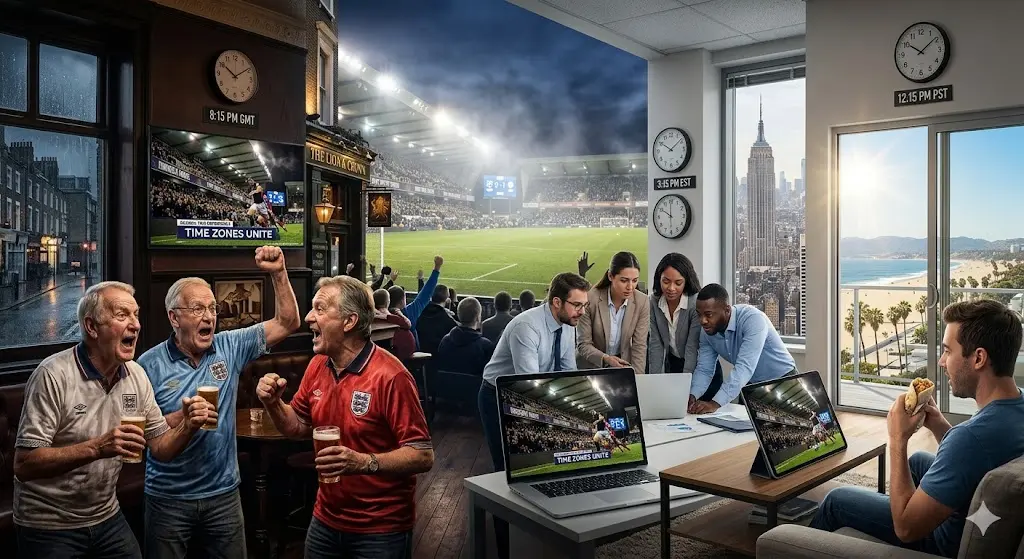
One of the biggest challenges for global football fans is managing time zone differences. A match that feels like a prime-time event in Europe may land in the afternoon or morning in North America.
UK Viewers
For UK fans, midweek matches are straightforward. Most games fall between:
- 6:45 PM and 9:00 PM local time
This makes it easy for fans to watch after work or school.
Eastern Time (EST)
For fans in New York, Florida, and the East Coast:
- Early games start around 1:45 PM
- Standard games around 3:00 PM
- Late games around 4:00 PM
Midweek football often overlaps with working hours, making streaming services essential for U.S. fans.
Pacific Time (PST)
For fans on the West Coast:
- Early games begin around 10:45 AM
- Standard games around 12:00 PM
- Late games around 1:00 PM
This makes midweek football more accessible during lunch breaks or daytime viewing.
What Makes Midweek Fixtures Exciting
Midweek football has a different energy compared to weekend matches. Players often deal with fatigue, rotation, and tactical experimentation, which creates unexpected outcomes.
Key characteristics include:
- Faster tactical changes between games
- Squad rotation leading to unexpected lineups
- Higher chance of underdog results
- Intense pressure on players with limited rest
- Managers prioritizing survival over style in some cases
Because teams do not always field their strongest XI, matches can feel less predictable and more open.
Tactical Impact of Midweek Schedules
Managers treat midweek fixtures differently depending on competition importance. For example:
- In Champions League knockout rounds, strongest lineups are used regardless of fatigue
- In domestic leagues, rotation is more common during congested weeks
- Defensive stability is often prioritized over attacking risk
- Substitutions play a bigger role in match outcomes
This tactical flexibility is one of the reasons midweek football is so engaging. A single substitution or formation change can completely shift the momentum of a match.
How Fans Can Keep Track of Fixtures
Because multiple matches often happen on the same night, fans need reliable ways to stay updated.
Common methods include:
- Checking official league schedules before matchday
- Using live score apps for real-time updates
- Following club announcements for lineup news
- Watching highlight recaps for overlapping fixtures
- Using streaming platforms that allow match switching
Midweek football rewards fans who stay organized because there is always more than one major match happening at the same time.
Final Thoughts
Midweek football fixtures are an essential part of the global game. While weekend matches attract larger casual audiences, midweek games often carry more tactical depth, higher pressure, and greater competitive intensity.
Understanding kickoff times across EST, PST, and UK zones helps fans stay connected to every major moment, whether it is a Champions League knockout night or a domestic cup showdown.
From early afternoon starts in the United States to late evening drama in Europe, midweek football continues to deliver some of the most important and unpredictable moments in the sport.
About the Author